Player-Built Ecosystems: Hidden Mechanics in Physics Sandbox Franchises
Written by Olivia Washington · Sep 4, 2026
Player-Built Ecosystems: Hidden Mechanics in Physics Sandbox Franchises
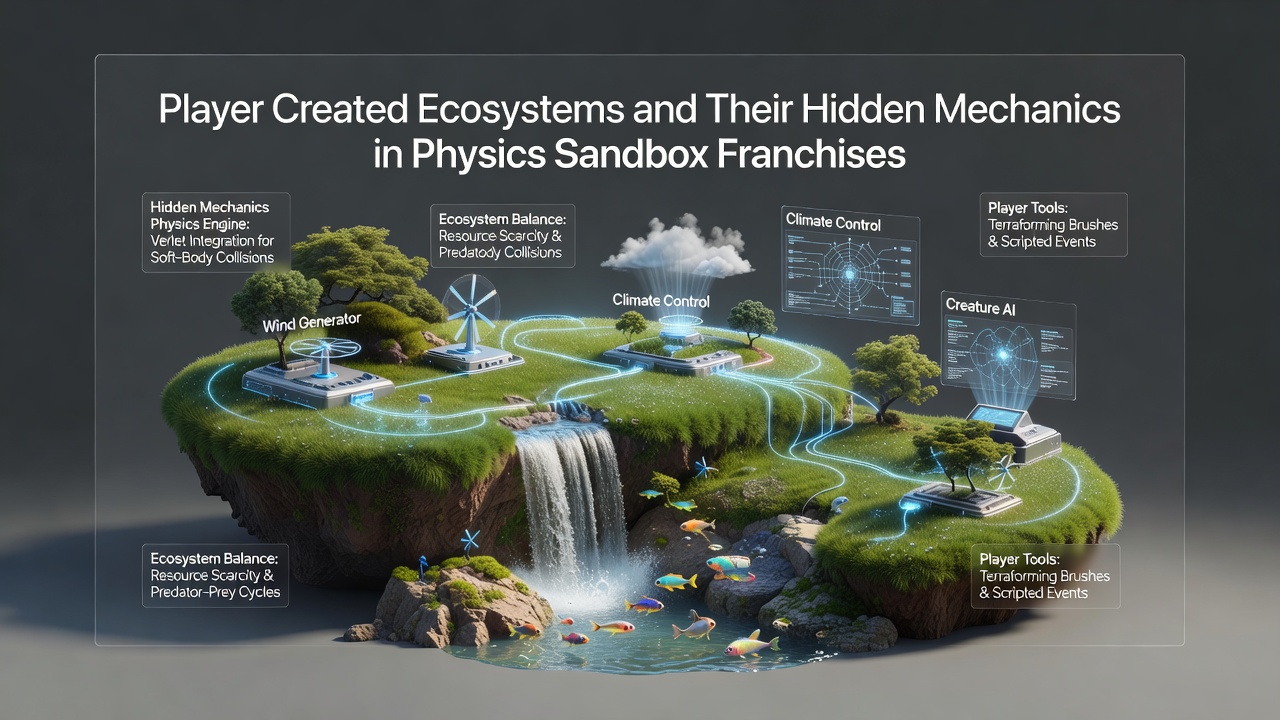
Player-created ecosystems emerge when users combine tools, objects, and rulesets in physics sandbox franchises to produce self-sustaining systems that extend far beyond initial design parameters. These franchises supply core physics engines that calculate forces, collisions, and material properties in real time, while players assemble components that generate unexpected behaviors over extended play sessions. Data from industry tracking shows continued growth in user-generated content across multiple platforms through 2026, with new tools released in September 2026 expanding simulation depth in several established titles.
Core Physics Systems That Enable Ecosystem Formation
Physics engines in these franchises process variables such as mass, friction, torque, and fluid dynamics at each frame, creating the foundation for larger constructions. When players link rigid bodies with joints or constraints, the engine begins to model stress distribution and energy transfer across the entire assembly. Observers note that small changes in one component often propagate through connected elements, producing chain reactions that players then refine into stable loops. Research from the University of California indicates that iterative player adjustments frequently reveal stable configurations that the original engine developers did not anticipate during initial programming.
Material properties play a central role in these processes. Different franchises assign unique values for density, elasticity, and thermal conductivity, which players exploit when constructing environments that include both static structures and moving parts. In titles where water or gas simulation exists, pressure gradients and flow rates add another layer of complexity that players incorporate into automated systems such as pumps or turbines.
Emergent Behaviors From Player Interactions
Player ecosystems develop when multiple constructions interact within the same simulated space over long periods. One common pattern involves feedback loops where output from one mechanism becomes input for another. These loops can maintain balance through opposing forces or can escalate until structural failure occurs. Those who study user content archives report that successful ecosystems often incorporate redundant pathways that allow the system to reroute energy or materials when primary routes encounter resistance.
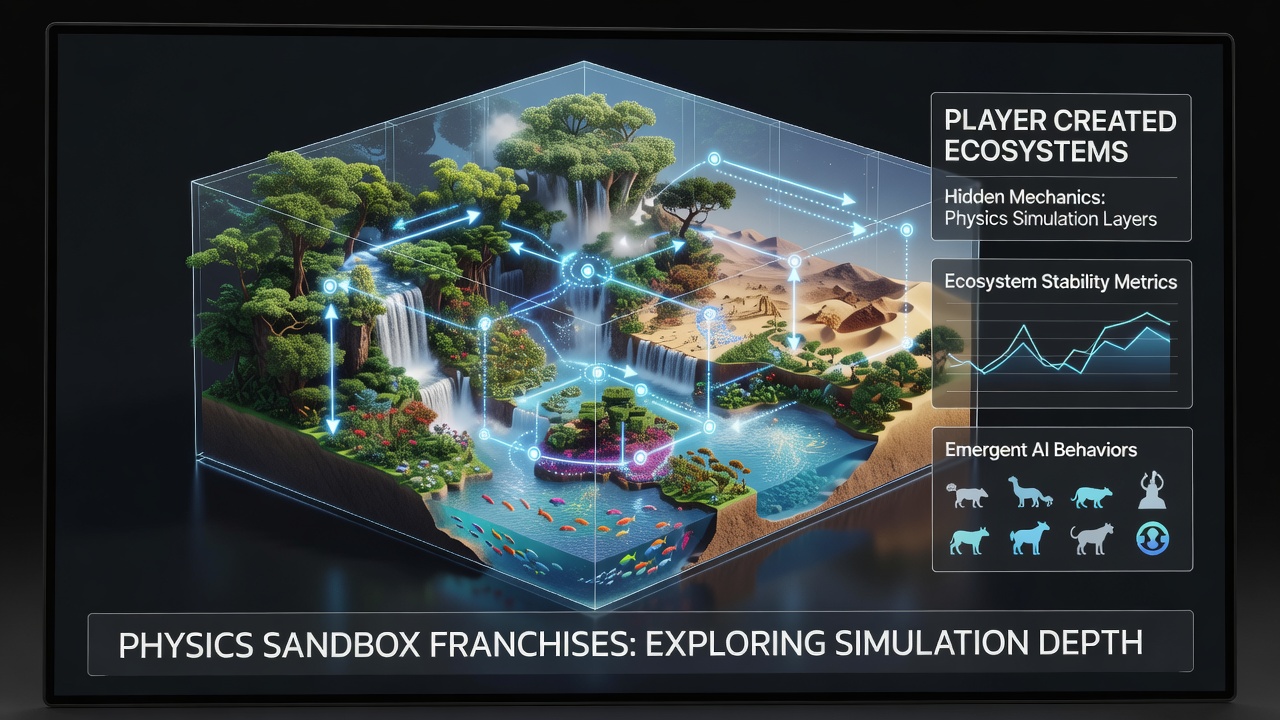
Hidden mechanics surface when players combine elements from different tool categories. Joints designed for simple hinges sometimes transmit rotational energy in ways that allow perpetual motion approximations until friction calculations eventually dissipate the stored energy. Fluid systems reveal additional layers when players introduce temperature variables that alter viscosity and create convection currents within enclosed spaces. Figures from the Entertainment Software Association reveal rising numbers of community-shared files that document these edge cases across multiple franchises.
Documentation and Community Knowledge Sharing
Communities maintain detailed records of discovered interactions through shared blueprints and annotated simulations. These records function as living databases where users catalog specific joint angles, material pairings, and timing sequences that produce reliable results. When new updates alter base calculations, community members test legacy constructions against revised engines and publish adjustment guides. The process keeps ecosystems functional even after core patches change underlying formulas.
Academic interest in these patterns has produced several analyses of emergent complexity. A 2025 report compiled by European simulation researchers examined how constraint solvers handle large numbers of simultaneous contacts and found that player-scale constructions often exceed the test cases used during engine validation. Such findings help explain why certain player ecosystems exhibit behaviors that appear inconsistent with smaller test scenes.
Technical Limits and Scaling Challenges
Performance constraints shape the upper boundaries of ecosystem size. Each additional joint or fluid particle increases computational load, and franchises implement various optimization techniques to maintain frame rates. Players respond by modularizing designs so that subsystems can activate or deactivate based on distance from the camera or activity thresholds. These modular approaches allow larger overall systems while respecting hardware limits reported in player surveys.
Networked play introduces further variables when multiple users contribute components to the same shared space. Synchronization of physics states across clients requires careful handling of authority and prediction, and mismatches can produce divergent outcomes between participants. Industry organizations continue to refine netcode approaches that preserve the integrity of player ecosystems during collaborative sessions.
Conclusion
Player-created ecosystems in physics sandbox franchises arise from the interaction of detailed simulation rules with persistent user experimentation. The hidden mechanics that sustain these systems become visible through repeated testing and community documentation, revealing layers of force propagation, material response, and feedback control that extend the original engine capabilities. Ongoing updates and shared resources keep these ecosystems active across changing software versions and hardware generations.